
Why Does My Car Wobble When Driving at High Speeds?
Why Does My Car Wobble at High Speeds?
Few vehicle problems get a driver’s attention faster than a wobble, vibration, or shake that appears once highway speeds are reached. One moment the vehicle feels perfectly normal around town. The next, the steering wheel begins to vibrate, the seat starts shaking, or the entire vehicle feels unstable as speed increases.
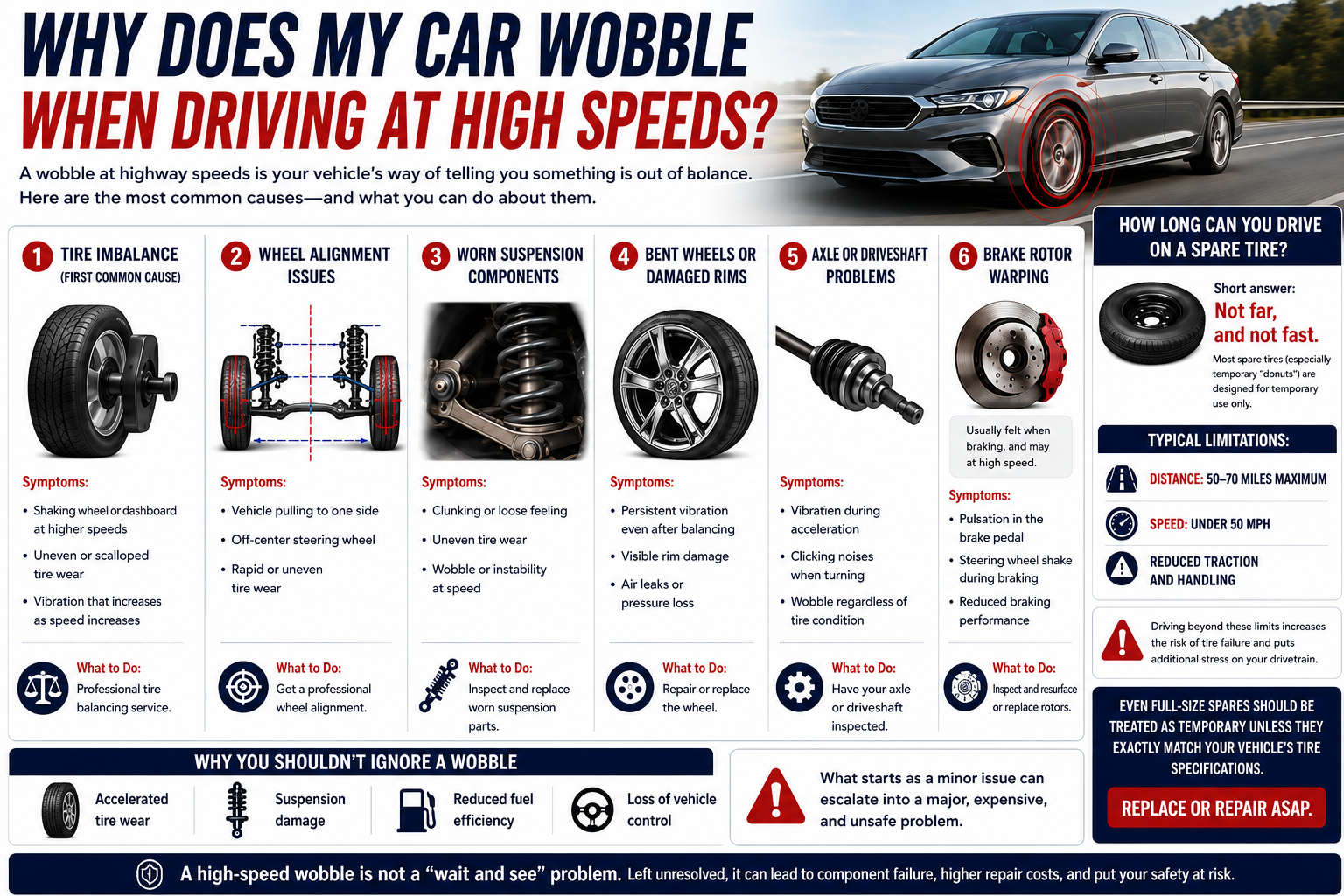
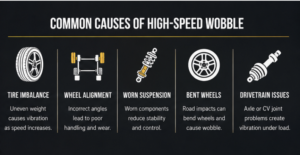
While many drivers assume they simply need new tires, a high-speed wobble can originate from several different systems. Tires, wheels, suspension components, steering parts, brake components, and even drivetrain assemblies can all create similar symptoms.
The challenge is that vibrations often feel alike from the driver’s seat. What seems like a tire problem may actually be a worn suspension component. What feels like an alignment issue may be a bent wheel. Identifying the true cause requires a thorough inspection of the entire vehicle.
For drivers in Rockledge, FL, understanding the most common causes of high-speed wobble can help determine whether the issue requires immediate attention and why professional diagnosis is often the fastest path to a safe repair.
What Happens When a Vehicle Begins to Wobble?
Every rotating component on a vehicle is designed to spin evenly around a center axis. When something becomes unbalanced, bent, loose, or worn, those forces begin acting against the vehicle instead of smoothly transferring through it.
At lower speeds, the imbalance may be too small to notice. As speed increases, centrifugal force magnifies the problem.
A tire that is only slightly out of balance may feel perfectly normal at 35 mph but create significant steering wheel vibration at 65 mph. Likewise, a worn suspension component that barely moves at city speeds may allow enough wheel movement to create instability on the interstate.
The location of the vibration often provides clues.
A steering wheel shake frequently points toward a front tire, wheel, or steering issue. A vibration felt primarily through the seat may indicate a rear wheel problem. A vibration that occurs only during acceleration may suggest drivetrain or axle concerns.
These clues help narrow the diagnosis, but they rarely tell the entire story.
Tire Imbalance: The Most Common Cause of Highway-Speed Vibrations
In many cases, a high-speed wobble can be traced back to tire balance.
Every tire and wheel assembly contains slight variations in weight. During installation, technicians use balancing equipment to identify these heavy spots and apply wheel weights that allow the assembly to rotate smoothly.
Over time, those conditions can change.
Wheel weights can fall off. Tires wear unevenly. Internal tire belts can shift. Road hazards can alter the shape of the tire.
Even a small imbalance becomes more noticeable as speed increases.
Common symptoms of tire imbalance include:
- Steering wheel vibration between 55 and 75 mph
- Vibration that becomes worse as speed increases
- Uneven tread wear
- Cupping or scalloping across the tire surface
- Reduced ride comfort
Many drivers are surprised to learn that balancing issues can develop even if the tires were properly balanced when originally installed.
A tire that has worn unevenly for several thousand miles may no longer rotate smoothly despite being balanced when new.
Tire Wear Patterns Can Reveal the Problem
Tires often tell a story long before other symptoms appear.
A trained technician can frequently identify the source of a vibration simply by examining tread wear patterns.
For example, cupped or scalloped tread blocks often indicate weak shocks or struts that allow the tire to bounce excessively.
Excessive wear on one shoulder of the tire may indicate an alignment problem.
Feathered tread blocks frequently suggest incorrect toe settings.
A tire with a separated belt may develop a visible bulge or high spot that creates a rhythmic vibration as it rolls.
This is one reason tire inspections remain such an important part of vibration diagnosis. The tire itself often provides evidence of the underlying problem.
Wheel Alignment Problems and Highway Stability
Wheel alignment affects much more than tire wear.
Modern alignment specifications control how each wheel contacts the road surface. Small changes in toe, camber, or caster can significantly affect steering feel and vehicle stability.
When alignment angles move outside manufacturer specifications, drivers may experience:
- Vehicle pulling left or right
- Wandering at highway speeds
- Uneven tire wear
- Off-center steering wheel
- Reduced steering responsiveness
Many alignment issues begin after striking potholes, curbs, road debris, or other impacts.
In some cases, the alignment itself is not the primary problem. Instead, a worn suspension or steering component may prevent the alignment from remaining within specification.
This is why experienced technicians inspect suspension components before performing alignment adjustments.
Aligning a vehicle with worn tie rods or ball joints is often a temporary solution because the underlying movement still exists.
Worn Shocks and Struts Are Frequently Overlooked
Drivers often associate shocks and struts with ride comfort, but they play a critical role in vehicle control.
Their primary job is to keep the tires planted firmly against the road.
When shocks or struts begin wearing out, the tires can bounce excessively after hitting bumps. At highway speeds, this loss of control can create instability, uneven tire wear, and vibration complaints.
Signs of worn shocks or struts may include:
- Excessive bouncing after bumps
- Nose-diving during braking
- Increased body roll during turns
- Uneven tire wear
- Highway instability
Because shocks often wear gradually, many drivers don’t realize performance has declined until new components are installed.
A vehicle with 80,000 to 100,000 miles may have significantly reduced suspension control even if the shocks are not visibly leaking.
Loose Steering Components Can Create Dangerous Handling Conditions
Several steering components directly influence wheel stability.
Tie rod ends, ball joints, steering rack components, and control arm bushings all work together to keep wheels pointed where the driver intends.
As these parts wear, small amounts of movement develop.
At first, the looseness may go unnoticed.
Eventually, those small movements become amplified at highway speeds, creating wandering, vibration, or wobble.
In severe cases, excessive steering component wear can create a significant safety hazard.
A worn ball joint or tie rod may not simply cause a vibration. It can eventually lead to loss of steering control if the component fails completely.
This is why any vehicle exhibiting steering looseness should be inspected promptly.
Bent Wheels and Road Impact Damage
Florida roads may be smoother than many northern states, but potholes, curbs, and road debris can still damage wheels.
A wheel does not need to be visibly crushed to cause vibration.
Even minor bends can create enough runout to generate a noticeable wobble at speed.
Drivers may notice:
- Persistent vibration after balancing
- Vibration that appears at specific speeds
- Slow air leaks
- Visible rim damage
A wheel balancing machine may reveal the problem immediately, but additional measurements are often necessary to determine whether the wheel can be repaired or requires replacement.
Tire Belt Separation: A Serious Tire Failure
One of the more serious causes of vehicle wobble is belt separation.
Modern tires contain steel belts beneath the tread surface that provide strength and stability.
Over time, impact damage, manufacturing defects, age, heat exposure, or road hazards can cause those belts to separate internally.
When this occurs, the tire may develop a distorted shape that creates vibration and instability.
Drivers often describe the sensation as:
- A rhythmic thumping
- A wobble that changes with speed
- A vibration that balancing does not eliminate
Because belt separation can eventually lead to tire failure, it should be addressed immediately.
Axle and Drivetrain Problems
Not every vibration originates at the tire.
Vehicles equipped with front-wheel drive or all-wheel drive systems rely on CV axles and drivetrain components to transfer power from the transmission to the wheels.
When these components wear or become damaged, vibrations can develop.
Common symptoms include:
- Vibration during acceleration
- Clicking while turning
- Shuddering under load
- Persistent highway-speed vibration
Unlike tire-related vibrations, drivetrain vibrations often change depending on throttle position.
If the vibration becomes worse when accelerating but improves when coasting, the drivetrain becomes a likely suspect.
Brake Rotor Problems Often Mimic Tire Issues
Drivers frequently report a wobble when the actual issue is braking-related.
Warped brake rotors or uneven rotor thickness can create vibration during braking that feels similar to a tire problem.
However, the key difference is timing.
If the steering wheel shakes primarily while applying the brakes, the braking system becomes the first area to inspect.
Typical symptoms include:
- Brake pedal pulsation
- Steering wheel shake during braking
- Increased stopping distance
- Uneven braking feel
Because many drivers experience the vibration at highway speeds while exiting the interstate, rotor problems are commonly mistaken for tire issues.
Why Ignoring a Wobble Usually Gets Expensive
Vehicle vibrations rarely improve on their own.
A minor imbalance may lead to accelerated tire wear. Uneven tire wear can place additional stress on suspension components. Worn suspension parts can further damage tires.
The result is often a chain reaction of repairs.
What could have been corrected with a balancing service may eventually require tire replacement, suspension repairs, and alignment work.
Ignoring vibration symptoms may also affect:
- Fuel economy
- Braking performance
- Steering response
- Tire lifespan
- Overall vehicle safety
The longer the issue remains unresolved, the greater the likelihood that additional components become involved.
Why Professional Diagnosis Matters
Modern vehicles require more than a visual inspection when diagnosing vibration complaints.
Experienced technicians use specialized equipment to evaluate wheel balance, wheel runout, suspension movement, alignment geometry, and steering system integrity.
At Schlenker Automotive, diagnosing a high-speed wobble involves looking beyond the obvious symptoms to identify the true root cause.
A complete evaluation may include:
- Tire condition assessment
- Wheel balance testing
- Alignment measurements
- Suspension inspection
- Steering system inspection
- Axle and drivetrain evaluation
- Brake system inspection
By identifying the actual source of the vibration, drivers avoid unnecessary parts replacement and gain confidence that the repair will solve the problem permanently.
Restore a Smooth, Safe Ride
A vehicle that shakes, vibrates, or wobbles at highway speeds is telling you something is wrong. Whether the cause is tire imbalance, wheel damage, suspension wear, steering looseness, or drivetrain problems, the issue should be addressed before it leads to more expensive repairs or compromises vehicle safety.
If you’ve noticed steering wheel vibration, highway-speed instability, or unusual tire wear, the team at Schlenker Automotive in Rockledge can perform a complete inspection and help identify the source of the problem.
From precision wheel balancing and alignment services to suspension repairs and tire replacement, addressing the issue early is the best way to protect your vehicle, your tires, and your peace of mind on the road.